

TechServe Alliance | Sales Roundtable Insights
October 2026 | IT & Engineering Staffing
AI is becoming an increasingly important part of sales operations for IT & Engineering staffing firms. From prospecting and meeting preparation to sales coaching and client intelligence, firms are experimenting with tools designed to improve productivity and strengthen business development.
However, October’s Sales Roundtable highlighted a growing distinction between using AI to increase activity and using it to improve sales effectiveness.
While AI can dramatically expand outreach capacity, participants reported limited returns from generic, high-volume campaigns. More promising applications involve personalized engagement, stronger discovery conversations, better use of client information, and more effective sales coaching.
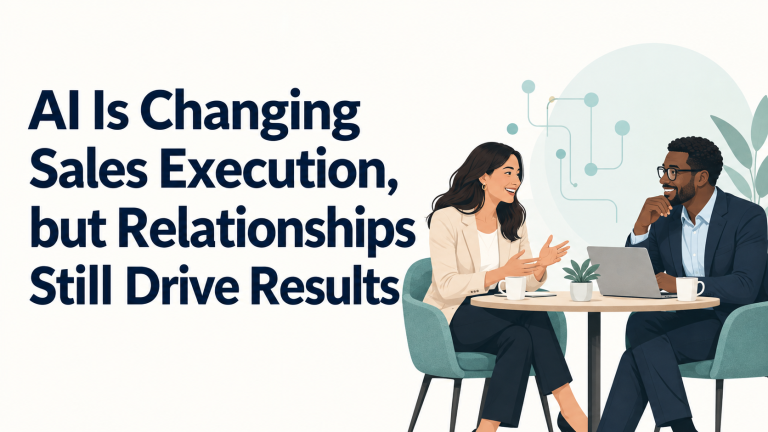
The central takeaway: AI is most valuable when it helps salespeople build stronger relationships and have better client conversations—not simply generate more outreach.
1. Personalized Outreach Is Outperforming AI-Generated Volume
As AI-generated prospecting becomes more widespread, buyers are receiving increasing volumes of automated messages. Participants reported that simply increasing outreach activity has not consistently translated into meaningful engagement or new opportunities.
Instead, outreach tied to specific business developments, existing relationships, referrals, and relevant client needs appears to be more effective.
Successful approaches discussed included referencing prior conversations, identifying organizational changes, monitoring hiring activity, and tailoring messaging to different types of technology decision-makers.
In-person networking, client events, and other relationship-building activities also remain important complements to digital prospecting.
What this means for staffing firms:
- Prioritize relevant, personalized outreach over generic automated campaigns.
- Use AI to research prospects and refine messaging rather than replace individual judgment.
- Monitor organizational changes and hiring activity for timely opportunities to engage.
- Incorporate referrals, networking, and face-to-face interactions into business development strategies.
Industry signal: AI is making outreach easier to produce but harder to differentiate. As automated prospecting becomes more common, relevance, timing, and established relationships may become even more valuable competitive advantages.
2. AI-Assisted Meeting Preparation Is Improving Sales Conversations
One of the more practical applications of AI discussed was preparing salespeople for client meetings.
AI tools can analyze company information, professional backgrounds, and previous interactions to help salespeople develop more relevant discovery questions and identify potential areas of client need.
This is particularly valuable for less-experienced salespeople who may benefit from additional context and guidance before entering a client conversation.
However, participants emphasized that AI-generated research must be reviewed for accuracy and used to supplement—not replace—fundamental discovery skills.
What this means for staffing firms:
- Build AI-assisted research and meeting preparation into sales workflows.
- Use AI to develop questions that uncover business challenges, technology initiatives, and workforce priorities.
- Train salespeople to validate AI-generated information and avoid overly scripted conversations.
- Focus on helping salespeople move beyond immediate staffing requirements to broader client needs.
Industry signal: AI may help accelerate sales development by giving representatives access to research and preparation capabilities that previously required more time and experience. The competitive advantage comes from turning that preparation into better discovery and stronger client relationships.
3. Sales Conversation Intelligence Is Emerging as a Coaching Opportunity
Firms are increasingly exploring AI tools that capture, organize, and analyze sales conversations.
Call transcription and conversation intelligence can help identify missed questions, evaluate listening habits, and reveal opportunities to engage clients more strategically.
Participants discussed using these capabilities to improve sales coaching, particularly for representatives who need to strengthen their discovery and consultative selling skills.
These tools can also provide managers with more objective information about sales conversations than traditional activity reporting alone.
What this means for staffing firms:
- Use recorded conversations and transcripts to identify coaching opportunities.
- Evaluate the quality of discovery, listening, and follow-up—not simply the number of meetings conducted.
- Help salespeople recognize opportunities to discuss broader business needs beyond individual job orders.
- Establish consistent coaching practices that turn conversation insights into measurable improvements.
Industry signal: Sales performance management may be evolving from tracking activity toward understanding the quality of client engagement. Firms that use conversation intelligence effectively could improve sales development without relying exclusively on additional headcount or prospecting volume.
4. Connecting Client Data Is Becoming Essential to AI Effectiveness
A recurring operational challenge is that valuable client information is often spread across multiple systems, including CRM platforms, email, meeting notes, project files, and internal communication tools.
Participants discussed efforts to centralize this information and automate the organization of meeting transcripts, follow-up tasks, and client records.
When information is accessible and connected, AI can help sales teams prepare for meetings, maintain continuity across accounts, identify follow-up opportunities, and reduce administrative work.
Without that integration, the value of AI can be limited by incomplete or fragmented information.
What this means for staffing firms:
- Improve the consistency and accessibility of client and prospect information.
- Evaluate how existing CRM, communication, and document-management systems can work together.
- Automate repetitive administrative tasks where there is a clear productivity benefit.
- Ensure account knowledge is retained and accessible across sales and delivery teams.
Industry signal: The next phase of AI adoption may depend as much on data organization and workflow integration as on the capabilities of individual tools. Firms with well-connected client information may be better positioned to translate AI investments into operational improvements.
5. AI Investment Decisions Are Shifting Toward Practical Business Value
Sales leaders are evaluating a growing range of AI-enabled tools for prospecting, lead nurturing, coaching, meeting intelligence, and workflow automation.
While interest remains strong, cost, overlapping functionality, integration requirements, and user adoption are important considerations.
Participants emphasized the value of beginning with a specific operational challenge, testing potential solutions, and expanding only after demonstrating usefulness.
For some firms, smaller workflows built around existing technology may offer a more practical alternative to purchasing another comprehensive platform.
What this means for staffing firms:
- Begin with a defined business problem rather than a new technology purchase.
- Test tools with a limited group before committing to broader implementation.
- Evaluate improvements in meeting quality, conversion, time savings, or sales productivity.
- Consider integration costs, training requirements, and ongoing usage when assessing ROI.
- Avoid adding tools that duplicate existing capabilities without providing measurable additional value.
Industry signal: AI adoption is moving beyond experimentation toward operational discipline. The firms that benefit most may not be those with the largest technology budgets, but those that successfully connect AI investments to specific business outcomes.
6. The Sales Role Is Evolving Toward More Strategic Client Engagement
Across the discussion, a broader theme emerged: technology can help automate research, documentation, and routine outreach, but the salesperson’s ability to understand client challenges remains essential.
Participants emphasized the importance of moving conversations beyond immediate resource needs and toward broader discussions about business priorities, projects, and potential solutions.
AI can support that transition by providing better client intelligence, surfacing opportunities, and helping salespeople prepare more effectively.
However, technology alone cannot create the trust or judgment required for consultative selling.
What this means for staffing firms:
- Develop salespeople’s discovery, business acumen, and consultative selling capabilities.
- Use AI-generated insights to support more meaningful client discussions.
- Encourage account teams to identify opportunities beyond individual staffing requests.
- Balance sales automation with deliberate relationship development.
Industry signal: As routine sales activities become easier to automate, the ability to interpret client needs and provide informed guidance may become an increasingly important differentiator for staffing firms.
Key Takeaways for Staffing Firm Leaders
October’s Sales Roundtable points to five priorities for business development organizations:
- Prioritize quality over outreach volume. AI-generated activity has limited value without relevant messaging and meaningful buyer engagement.
- Use AI to improve discovery and coaching. Meeting preparation and conversation analysis offer practical opportunities to strengthen sales performance.
- Make better use of existing client intelligence. Connecting CRM data, meeting notes, and communication history can improve account management and follow-through.
- Adopt AI with a clear business objective. Test tools against defined problems and measurable outcomes before scaling.
- Invest in relationship-driven, consultative selling. Technology should help salespeople understand clients more deeply, not replace the human relationships that drive business development.
Looking Ahead
AI is creating opportunities to improve nearly every stage of the sales process, but greater automation does not automatically produce stronger business development results.
The more significant opportunity may lie in helping salespeople become better prepared, more informed, and more effective in their interactions with clients.
For IT & Engineering staffing firms, the competitive advantage is shifting from how much outreach a sales team can generate to how effectively it can turn client intelligence into meaningful conversations and new business opportunities.

These insights reflect themes discussed during TechServe Alliance’s October 2026 Sales Roundtable. They represent qualitative observations from participating industry professionals rather than a statistically representative industry survey. All participant names, company identifiers, and potentially identifying details have been removed
This recap is not for external distribution. This is an exclusive roundtable discussion.